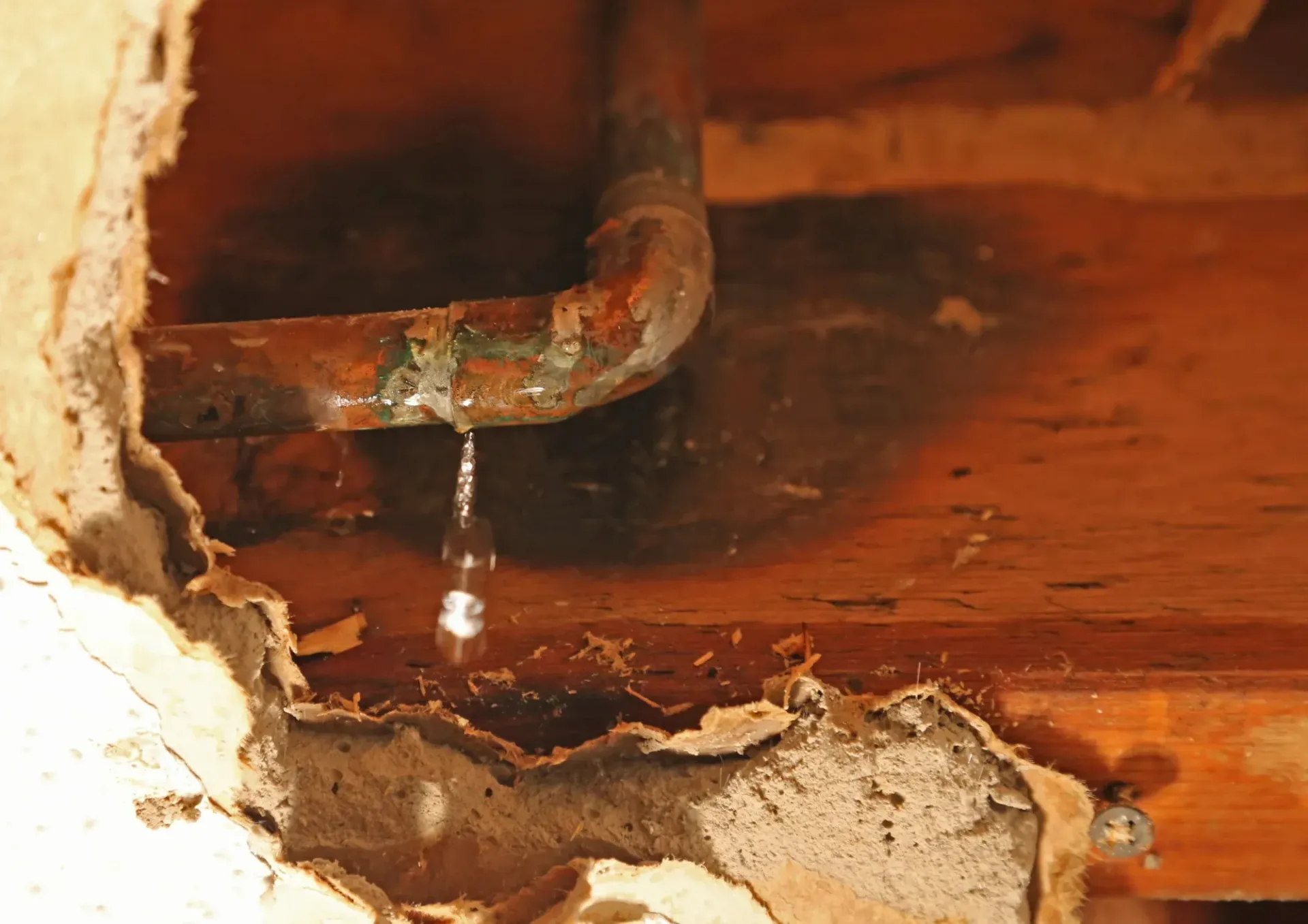
A toilet that keeps running almost always has a worn part inside the cistern: either the flush valve at the bottom no longer seals, or the fill valve doesn't shut off when the cistern is full. It's a small repair, but don't leave it: a leaking flush can waste up to 600 litres of water a day, according to Brabant Water.
In most Dutch homes the cistern is hidden in the wall (inbouwreservoir) and all you see is the flush plate. That makes the problem easy to miss and, for many expats, confusing to fix. Your English Plumber (RRD Service & Installatie, 15+ years' experience) repairs it across Amsterdam, Amstelveen, Den Haag and Utrecht, on site within 2 hours.
How do I know if my toilet is leaking?
Water trickling down the back of the bowl, a soft hissing sound, or a cistern that refills by itself means it's leaking. Many leaks are silent. Two quick checks:
- Tissue test (NI Water): flush, wait 30 minutes, then wipe a dry piece of toilet paper around the back of the bowl. Wet paper means water is seeping through.
- Water meter test (Waternet): close all taps and make sure the washing machine and dishwasher are off, but leave the main valve open. If the red triangle on your water meter still moves after a full minute, water is going somewhere.
How much water does a running toilet waste?
Far more than a dripping tap. Brabant Water puts a leaking flush at up to 600 litres a day, against about 100 litres for a dripping tap. Flemish water company De Watergroep arrives at the same number from the other direction: 25 litres an hour, or 219,000 litres a year.
At Waternet's 2026 Amsterdam rates (€1.18 per 1,000 litres plus €0.437 tap water tax, plus 9% VAT) that's about €386 a year . For scale: CBS measured that the average person in the Netherlands flushes 30.2 litres a day, so a badly leaking toilet uses as much as around 20 people.
Why does my toilet keep running?
Three parts cause almost every running toilet: the flush valve, the fill valve and the flush button.
- Flush valve (spoelventiel): the rubber seal at the bottom of the cistern. Worn or dirty, it lets water trickle into the bowl non-stop. Sign: a thin stream down the back of the bowl and a cistern that tops itself up every few minutes.
- Fill valve (vlotterkraan): stops the water once the float rises. A worn washer or a float set too high keeps water coming in, and it drains away through the overflow. Sign: constant hissing.
- Flush button: dirt or a worn spring can keep it from springing back, holding the valve open. Sign: it started right after flushing, and pressing again stops it.
Guides often blame limescale. In Amsterdam that's less likely: Waternet's water is soft (7.8 °dH) and leaves little limescale, so a worn rubber seal is the usual suspect.
Can a toilet hidden in the wall be fixed without breaking tiles?
Yes. Everything that wears out sits behind the flush plate. Geberit says the flush valve and float valve of its concealed cisterns are reachable through the opening behind the plate, and it keeps spare parts available for up to 50 years. So a running toilet rarely means a new toilet or broken tiles: it means the right seal or valve for your model.
The brand is usually printed on the flush plate. WhatsApp us a photo of it and we bring the matching part.
What should I do if my toilet won't stop running?
Shut off the water to the cistern and book a repair. On a concealed cistern, carefully unclip the flush plate; there's usually a small stop valve behind it. On an exposed cistern, it's the small valve on the supply pipe. Can't find one? Close the main water tap (hoofdkraan) next to your water meter. The toilet will still flush once with the water left in the cistern.
Your English Plumber works in English, 24/7: on site within 2 hours, no hidden call-out fees and a 1-month warranty. Call 06-24356980 or WhatsApp us.
Running toilet: quick answers
Is a running toilet an emergency?
Not if the water goes into the bowl; it costs money, not your floor. It is urgent when water runs onto the floor or through a ceiling. Then close the hoofdkraan and call us straight away. In an apartment, see who pays for a leak to the flat below.
Do I need to replace the whole cistern?
Almost never. A concealed cistern is built into the wall frame and designed to last; the seals and valves inside are the parts that wear, and those are replaced on their own.
Should I call Waternet or a plumber?
A plumber. Waternet is responsible up to the main valve and the water meter. Everything after the meter, including your toilet, is a job for a plumber.